A patch can cover the place you can see while leaving the water route underneath unresolved. Understanding that distinction explains why a repair sometimes needs to open more material before it can close the leak.
The patch and the water path are different things
Consider a common roofing situation: a ceiling stain appears beside a wall after a hard rain. Sealant is applied along the visible roof-to-wall edge. The room stays dry for a while, then another rain brings the stain back. That sequence does not, by itself, identify one cause, but it shows why the outside bead needs to be considered alongside the layers behind it.
Water may be arriving from higher on the wall, passing behind the flashing or entering through a joint that moves. The patch may also have lost its bond to a dusty or deteriorated surface. A repair that addresses only the visible edge can leave one of those paths intact.
The next investigation should ask where water enters and how it travels, rather than treating the stain or old patch as the exact repair boundary. Accessible interior observations can help relate the room to the roof, but a concealed connection may need to be opened before its arrangement is clear.
What a lasting repair must reconnect
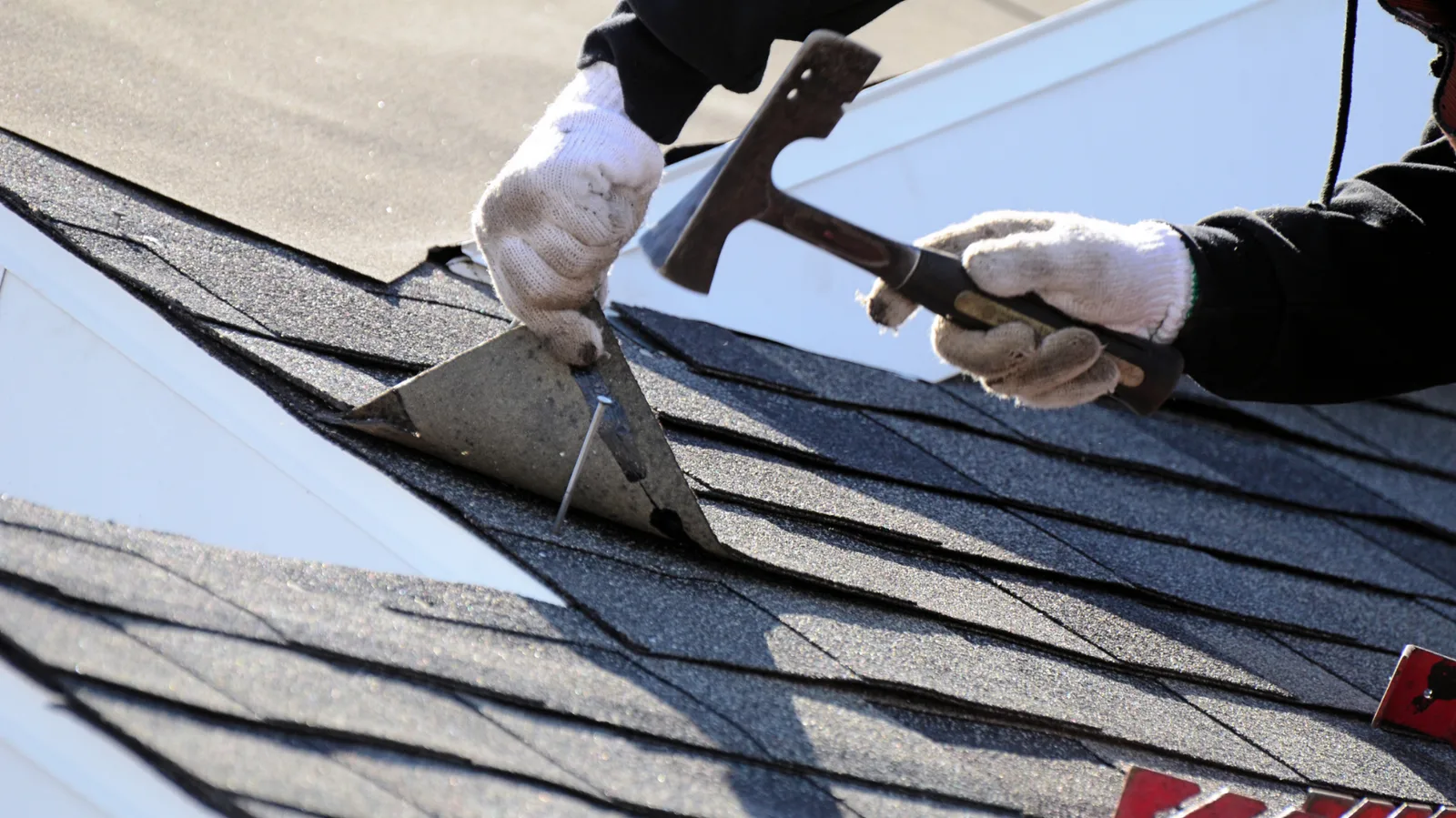
A lasting connection needs a base that can hold the work. Soft decking, torn membrane or shingles that crack when lifted can prevent a new piece from being fastened or joined properly. Covering that weakness does not restore the material underneath. The repair may need to extend far enough to reach layers that can accept the new work.
It also needs the right overlap. On a shingle roof, water should pass from an upper layer onto the next lower layer. Flashing at a wall works with that sequence; it is not merely a strip laid across the outside. At a membrane seam, the compatible preparation and joining method create the perimeter connection. Different coverings call for different repairs.
Finally, the repaired detail needs to accommodate the conditions that caused trouble. If a loose piece continues moving, a fresh surface seal may fail again. If runoff concentrates at a valley, the repair needs to preserve that water route. The useful explanation is what has been restored and how it connects, not simply that the area received more material.
When more of the roof needs attention
Sometimes opening a small area reveals that the problem extends farther. Wet insulation, deteriorated wood or a line of failed flashing can widen the work. That should lead to an explanation of the newly visible condition and the additional scope before it is concealed again.
A broad replacement is a different decision. It becomes relevant when wear, repeated failures or the inability to integrate local repairs extends across much of the covering. One returning leak alone does not prove the whole roof has reached that point. The condition around the problem is what lets a roofer explain the boundary.
If a patch keeps leaking, start with roof leak repair to trace the route. The roof repair page explains how the work reconnects the affected layers and what can change its extent.