When a townhome roof leaks, there are two things to establish: what the roof needs and who can authorize work on the affected exterior. A roofer needs to trace the water and explain a sound repair boundary. The building’s owner or association needs to coordinate the permissions and access that let that repair happen.
The leak location and the repair boundary may differ
A stain beside an upstairs wall tells us where water appeared indoors. It does not show exactly where rain entered or where the roofing repair can safely end. On connected homes, a roof slope, valley or wall detail can continue beyond the room underneath it. We start with the leak and examine the surrounding roof connections before drawing a repair boundary.
Flashing is part of that investigation. Where shingles meet a vertical wall, the metal needs to work with the roofing and wall layers so runoff stays outside. An opening higher on that connection can let water travel before it reaches the ceiling. A repair may need access to adjoining shingles or wall material to restore the overlap, even when the visible stain is small.
This does not mean that a leak in one home requires replacing the entire row. It means the work needs a sound stopping point. A local repair remains useful when it can reconnect to serviceable material. Widespread deterioration or adjoining layers that cannot accept a reliable connection can make a wider project the better question.
Bring the person responsible for exterior work into the conversation
For a townhome, the roofing question and the authority to commission work need to move together. We can explain the roof condition and proposed repair. The owner or association needs to establish who can approve that work, which exterior areas it may include and how access will be arranged. A physical roof edge is not enough to determine those responsibilities.
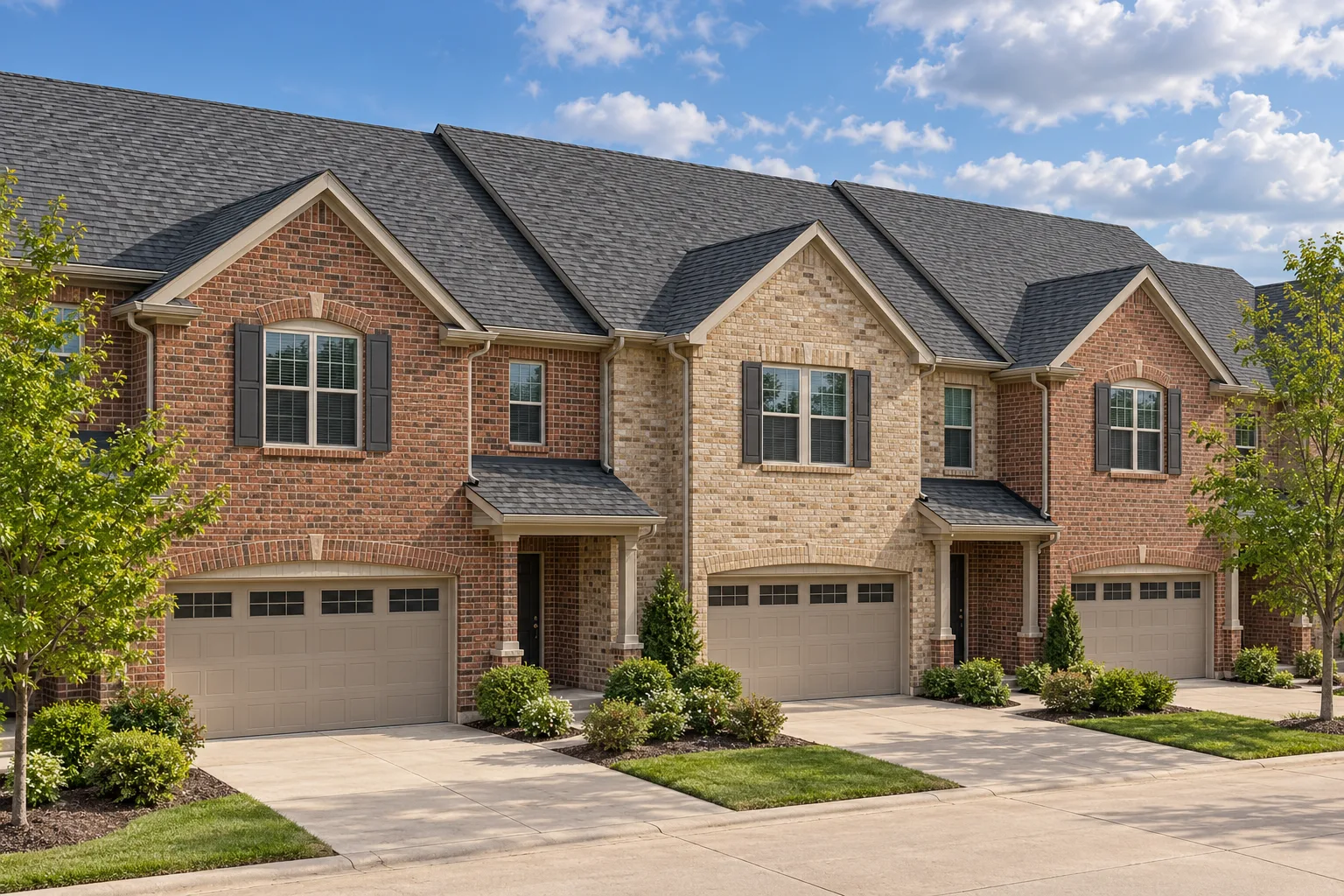
Heritage Village is a useful local example. Its builder describes two-story townhomes and says the HOA maintains a building master insurance policy and provides exterior maintenance as outlined in the CC&Rs. That description points to governing documents and the community’s management process. It does not settle who authorizes or pays for a particular roof repair, or whether a claim will cover it.
The Heritage Village builder FAQ describes that arrangement, checked October 1, 2026. Our Heritage Village roofing page explains the connected-roof considerations in more detail. Other townhome communities can have different responsibilities.
A useful repair plan explains what touches the neighboring roof
Suppose a failed wall connection sits close to the junction between two homes. Replacing the exposed metal alone may leave the upper edge behind old siding or underneath roofing that must also be opened. We explain which adjoining materials need to be lifted, what can be retained and where the new work will connect. This gives the person approving the project a physical description of the work, rather than an unexplained request to repair someone else’s side.
Access matters too. The roofer may need a ladder position, room to handle removed material and a clear path past shared entrances. Those arrangements should fit the building and its occupants. Coordination is especially useful when the access point and the room with the leak belong to different homes. It is not permission to cross another property or start a wider project.
If opening the detail reveals damaged decking, the repair boundary may change. The affected wood needs attention before the covering is restored. That change should be explained to the person authorizing the work so the revised scope is understood. Interior ceiling repairs and any separate wall work should also be distinguished from the roofing itself.
Start with the leak, even while responsibility is being clarified
You do not need to identify the failed part before asking for help. Tell us which room is affected, whether water is coming in now and whether an owner or property manager is coordinating the building. Mention any previous work you already know about. Those details help connect the concern indoors to the roof inspection without sending you onto the roof.
If water is entering, keep clear of wet electrical fixtures and sagging ceilings. Roof access and temporary protection depend on safe conditions. Temporary protection can limit exposure while permanent work is being arranged, but it does not establish the final repair, approval or insurance outcome.
Our roof leak repair service traces the opening and the affected layers. A free roof inspection gives the roof condition a place in the discussion while the appropriate people settle authorization and access.